Hamburg, Germany
WorkJanuary 1, 2023

6C Structural Monitoring and Operational Modal Analysis of Wind Turbines

Worked at the interface of rotational sensing, structural vibration, and damage detection, including 6-component measurements, operational modal analysis, and student research on civil infrastructure monitoring.View publication or abstract
AreaStructural Health MonitoringMethod6C Sensing and Modal AnalysisOutputGIOTTO Project and Student SupervisionTool6C MeasurementsToolOperational Modal AnalysisToolStructural DynamicsToolDamage Detection
Mr. Laurin Muller
, Dr. Anjali Dhabu,
Dr. Stephanie Donner
,
Dr. K. Bode
6C Structural Monitoring and Operational Modal Analysis of Wind Turbines
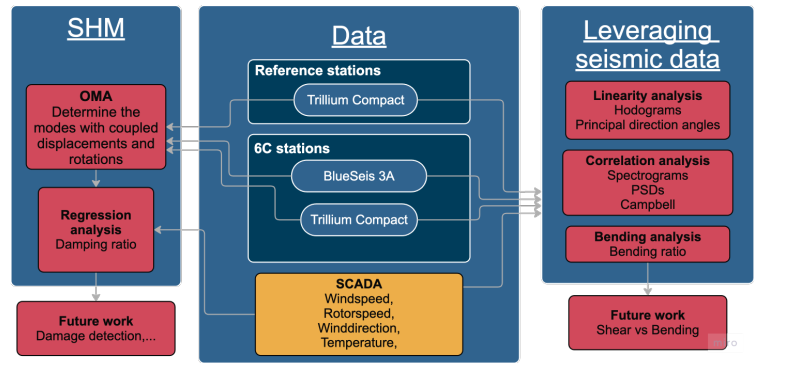
Figure Credit: Mr. Laurin Muller: 'Structural Health Monitoring of wind turbines using 6C ground motion data’ [Masters Thesis, Department of Geophysics, University of Hamburg] Civil engineering structures vibrate in ways that contain information about stiffness, damage, boundary conditions, and dynamic behavior. This work asks how 6-component measurements, including rotational motions, can improve structural monitoring and modal analysis. The work combines structural dynamics, 6C sensing, vibration interpretation, and operational modal analysis. It connects measured motion to questions about modal behavior, structural condition, and the practical usefulness of rotational observations in infrastructure monitoring. This case study highlights the structural-engineering side of Dr. Dhabu's research profile. It shows how rotational sensing can move from seismological observation toward monitoring applications for civil engineering structures, including wind-turbine and building-vibration contexts.
  • GIOTTO project work on building vibrations and condition analysis.
  • Conference contribution on 6-component operational modal analysis of wind turbines for damage detection.
  • Contributions to research on seismic monitoring of civil engineering structures with 6C measurements.
  • Student supervision connected to 6C ground-motion data and structural monitoring.
Infrastructure monitoring needs measurements that can reveal more than one-dimensional vibration. Rotational components can add information about structural behavior, helping researchers and engineers better understand damage, modal response, and sensor placement.
BGR logo

BGR Hannover

Vestas logo

Vestas Wind Systems

Related projects

Rotational Ground Motions for Earthquake-Resistant Bridge Design
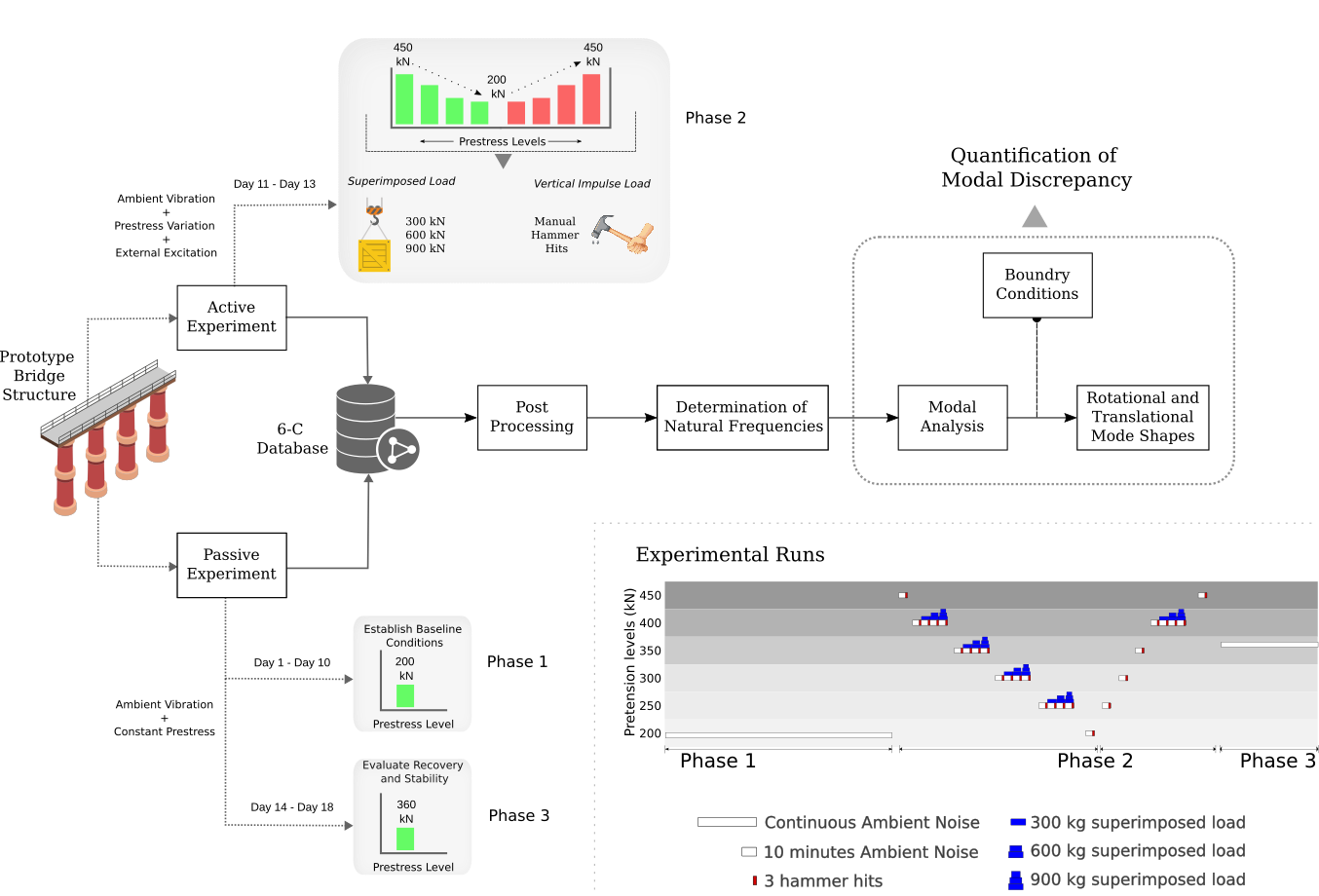
Research BriefConnected rotational ground-motion characterization with bridge-design questions, showing how rotational components can matter when translating seismological measurements into earthquake-engineering implications.
Area, Method, and Outputs
AreaEarthquake EngineeringMethodBridge Structures and Rotational MotionsOutputCollaborative Preprint, 2024ToolStructural DynamicsToolEarthquake-Resistant DesignToolRotational Sensing