Selected Research Work
Observing earthquake motions beyond translation.
I use numerical simulations to reveal how complex Earth structure shapes rotations, strains, and translations in seismic wavefields, connecting earthquake physics with structural resilience and six-component ground-motion analysis.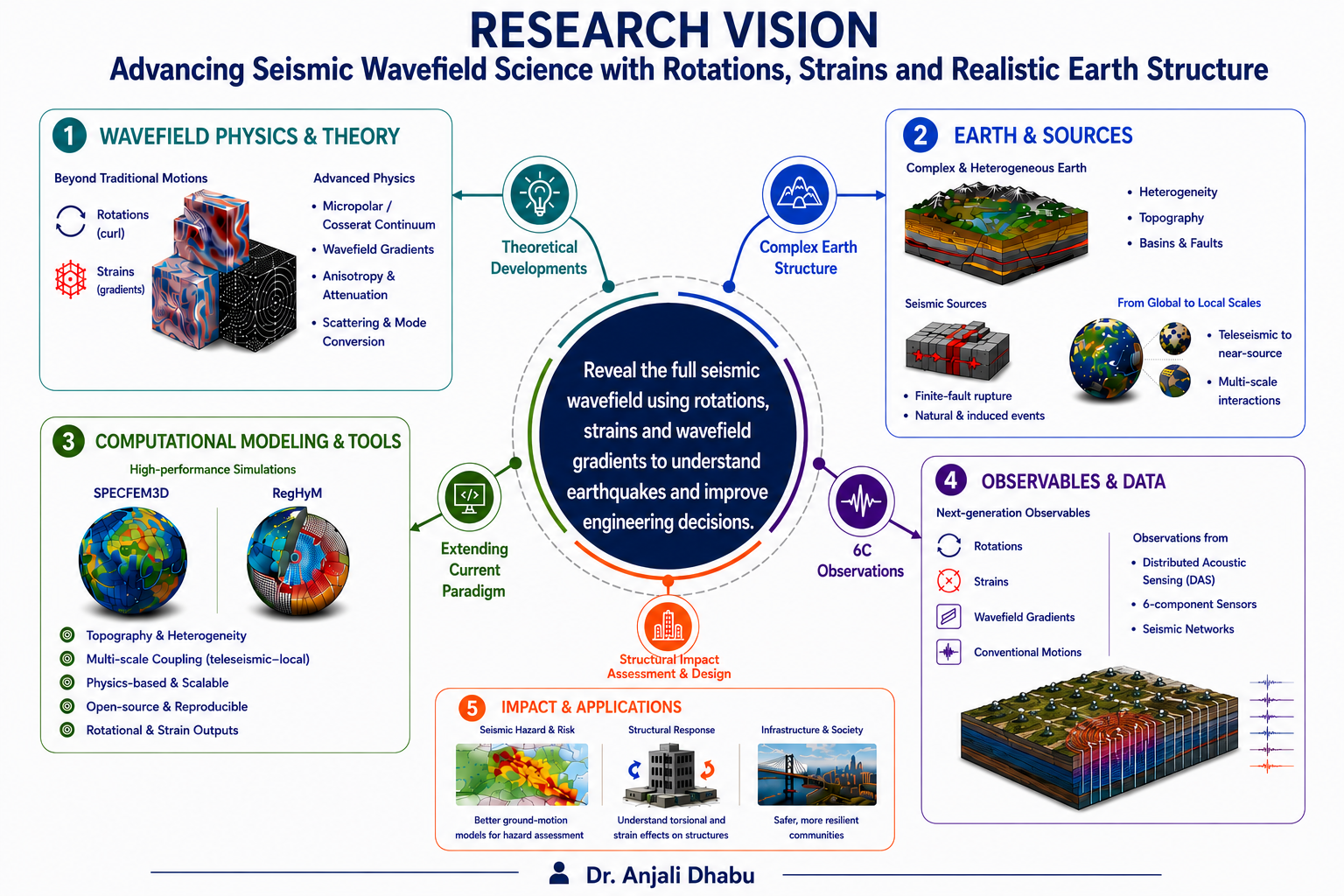
Research Themes
Five themes organize the research program.
Each theme opens into focused projects with methods, outputs, and publication context for an independent research agenda.1
Wavefield Physics & Theory
Foundational theory for rotations, strains, wavefield gradients, and reduced micropolar continua.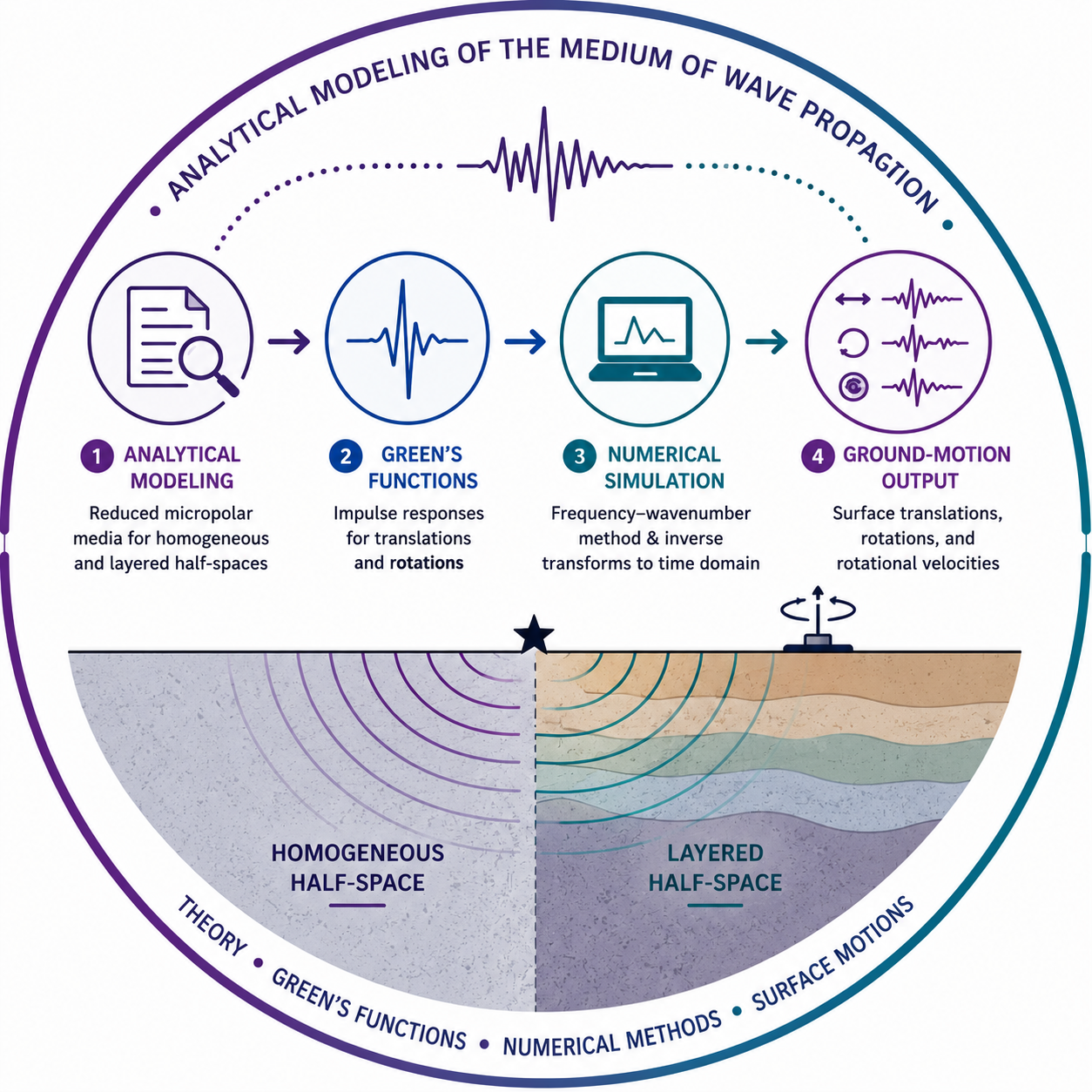
2
Earth & Sources
Complex Earth structure, heterogeneity, finite-fault rupture, and strong-motion source processes.Effect of Heterogeneities on Rotational Seismology
Model how layered and irregular Earth structures change translational, rotational, and strain fields.Open HERS flagship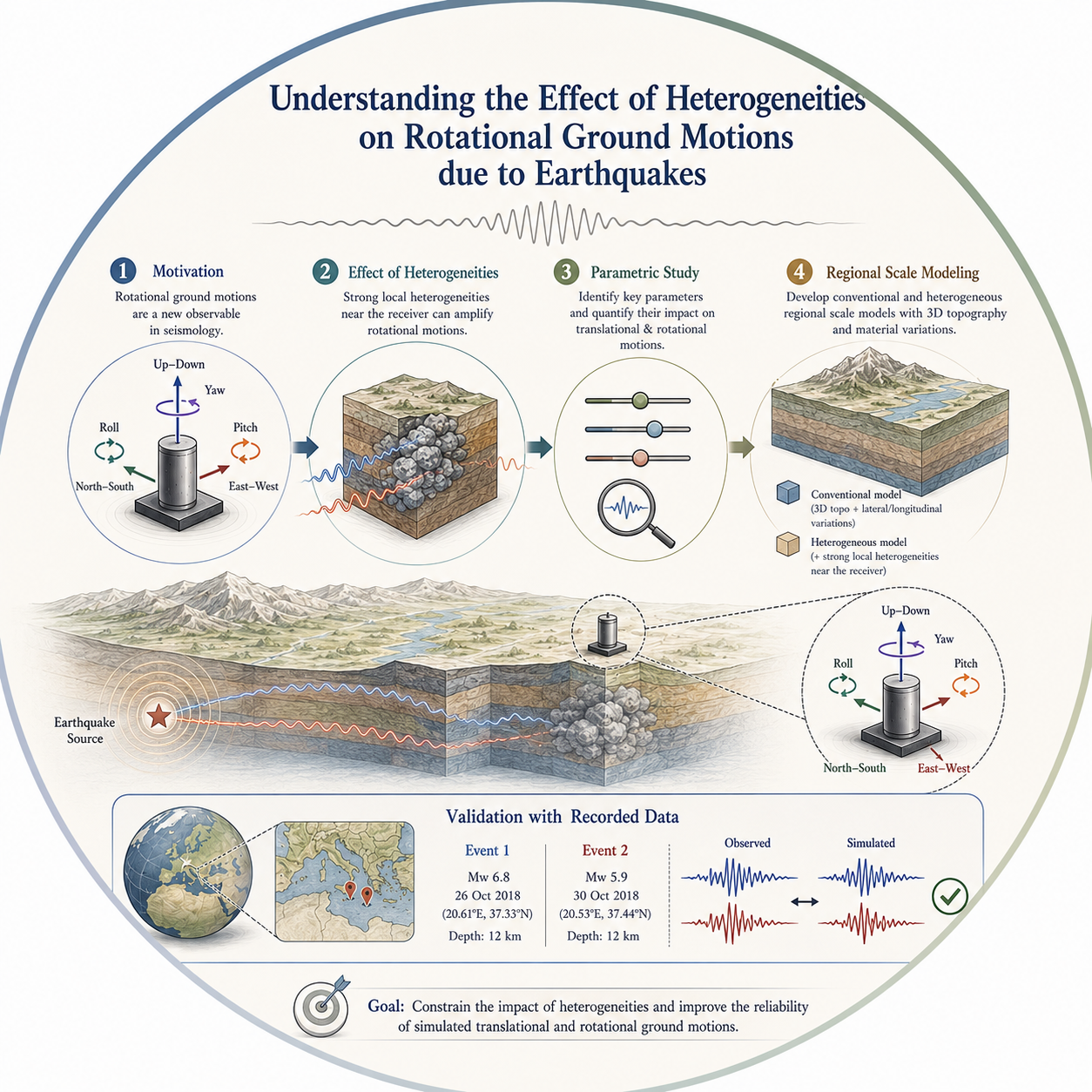
Earthquake Source Processes and Strong-Motion Generation
Use finite-source slip models and statistical extremes to identify source regions that control strong ground motion.1 associated project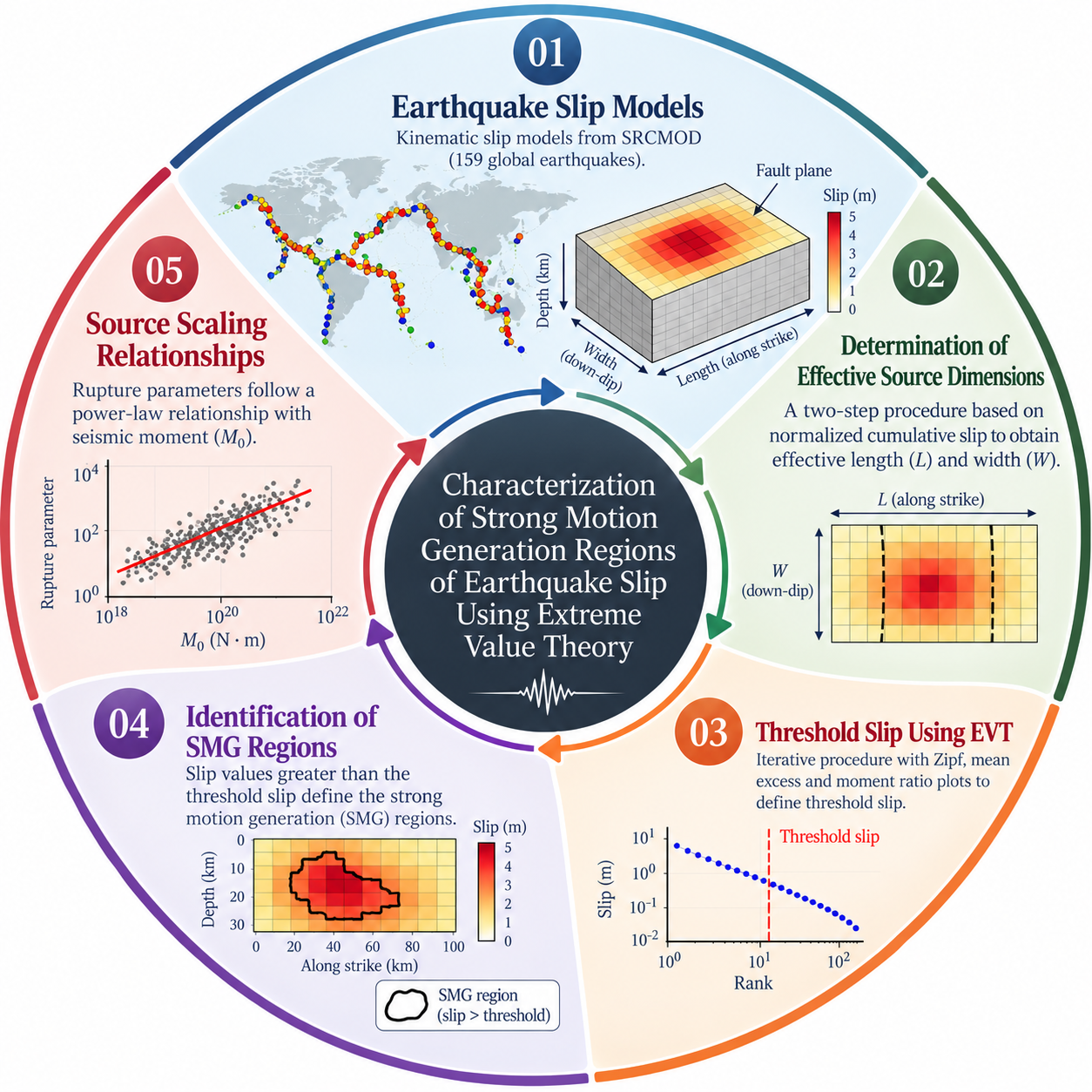
3
Computational Modeling & Tools
SPECFEM, RegHyM, teleseismic-to-local workflows, and scalable simulation tools for realistic wavefields.Developing a High-Resolution Subsurface Model through Teleseismic Wave Simulation
Build simulation workflows that connect teleseismic wavefields with local subsurface response.1 associated project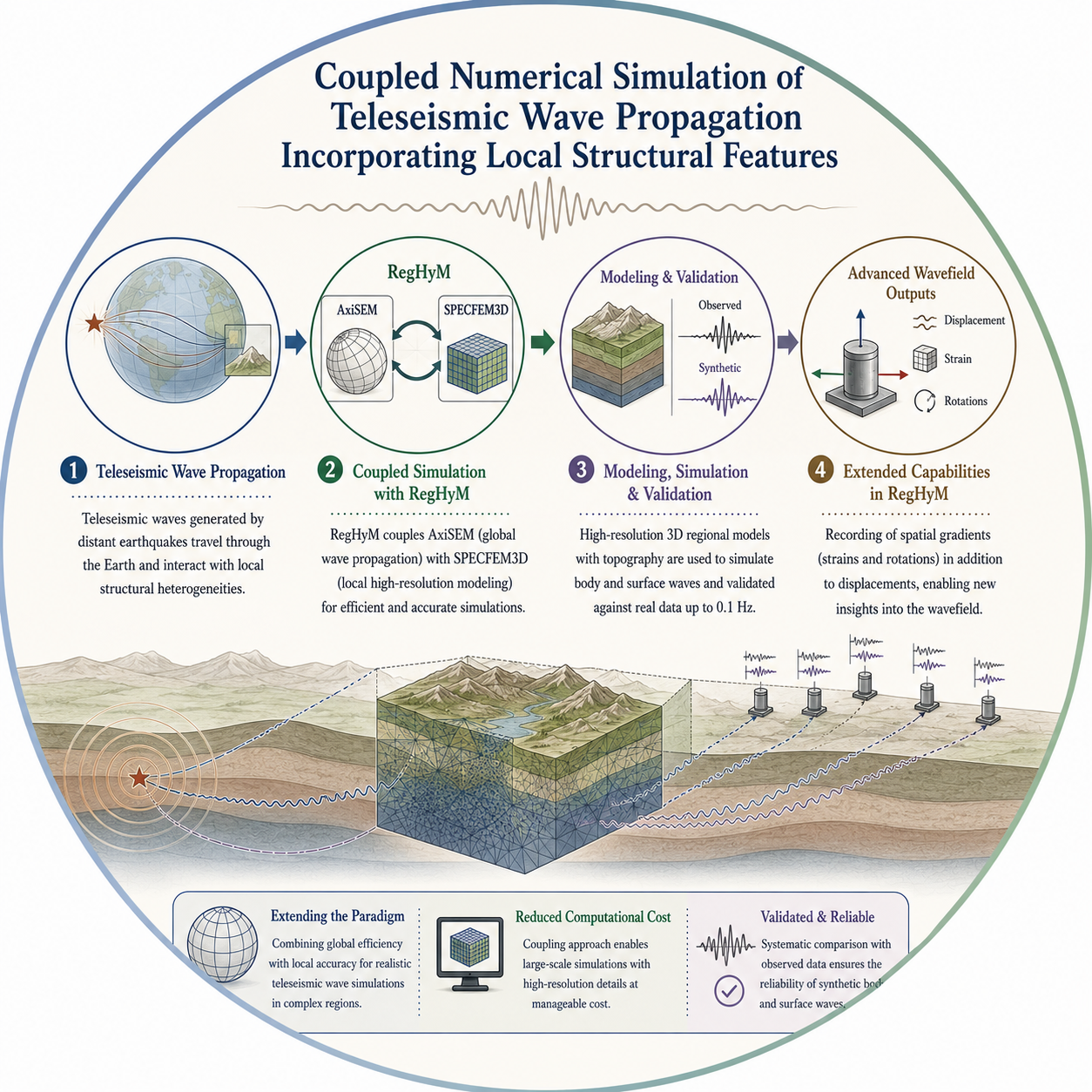
Propagation Characteristics of Rotational Ground Motions in Layered Earth Media
Extend SPECFEM3D workflows to compute rotations alongside translations and validate them against layered-Earth benchmarks.1 associated project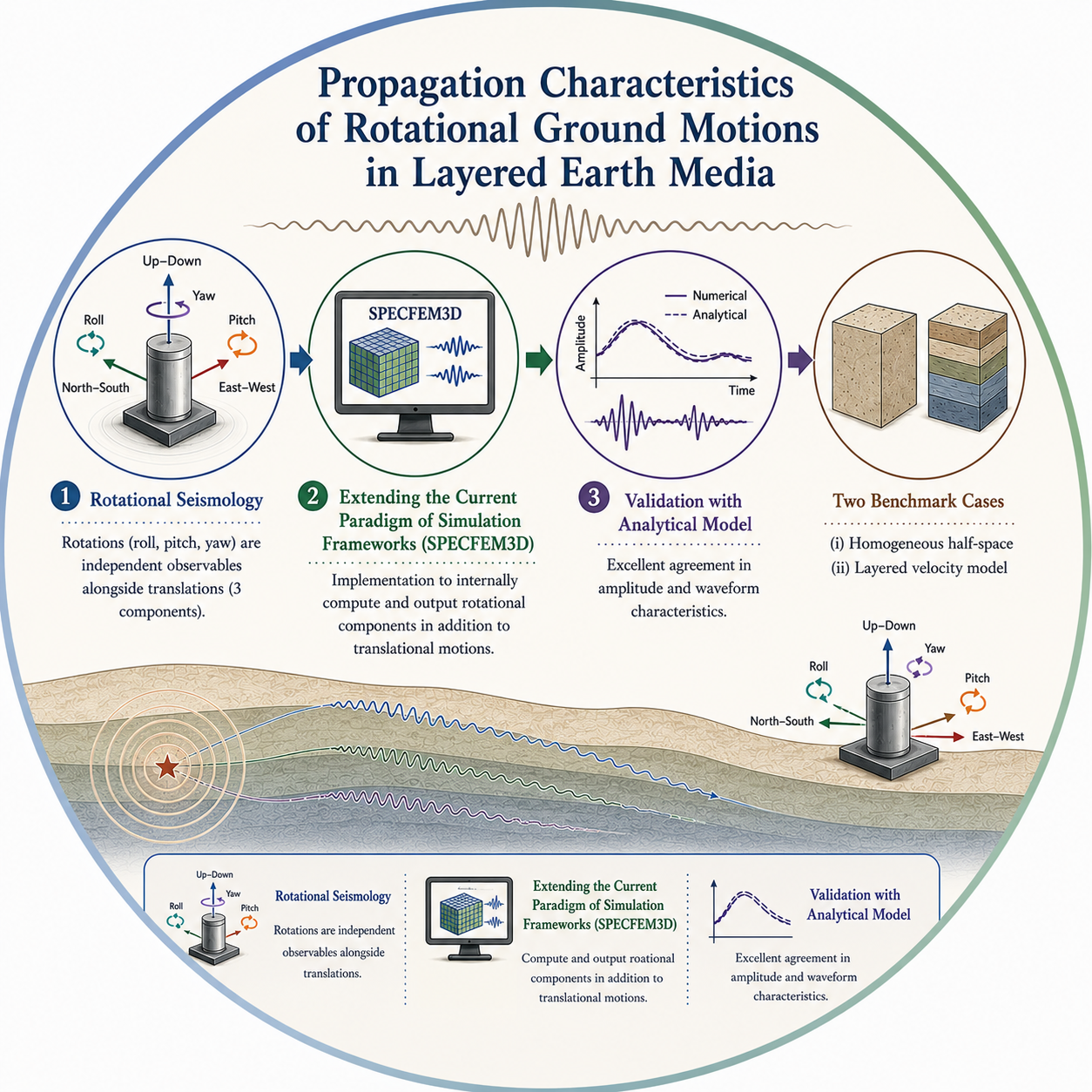
4
Observables & Data
Six-component observations, rotations, strains, wavefield gradients, topographic datasets, planetary-surface evidence, and structural monitoring data.Influence of Topography on Earthquake Ground Motions
Study how terrain and regional structure reshape simulated earthquake ground motions.2 associated projects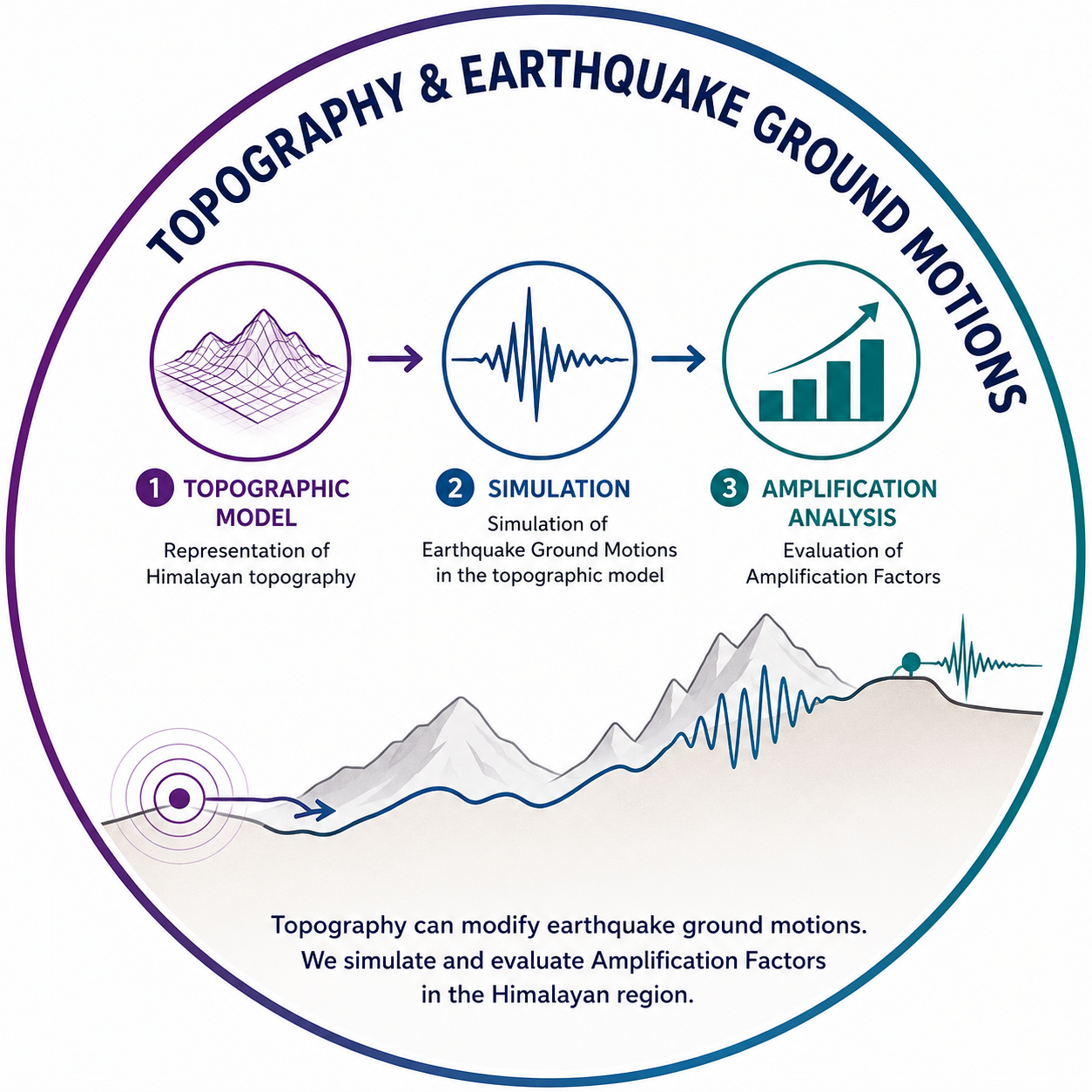
Planetary Seismology
Interpret lunar and Martian scarps, faults, landslides, boulder falls, and ground-motion models as evidence of recent planetary seismicity.2 associated projects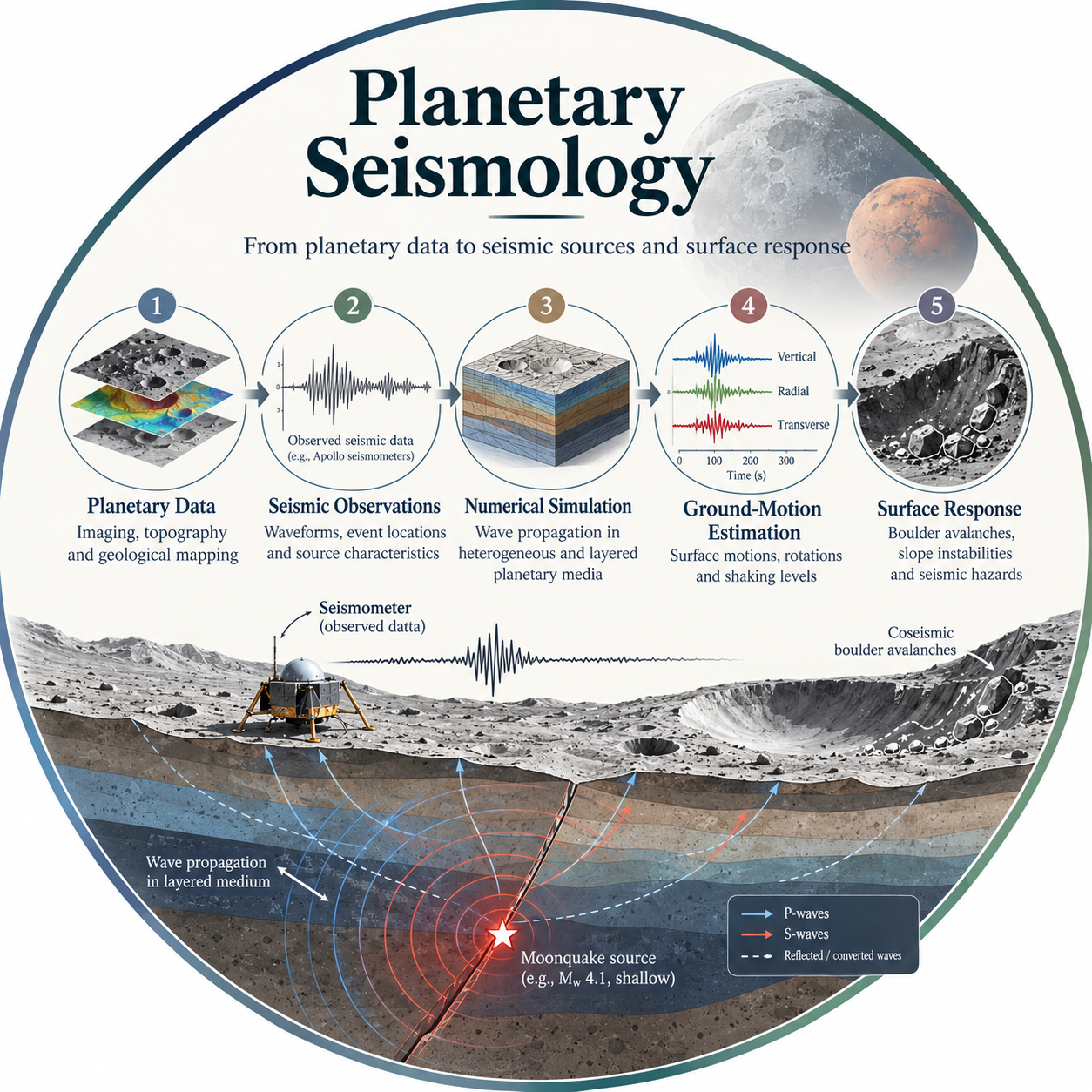
5
Structural Health Monitoring
6C sensing, operational modal analysis, structural dynamics, and infrastructure-response interpretation.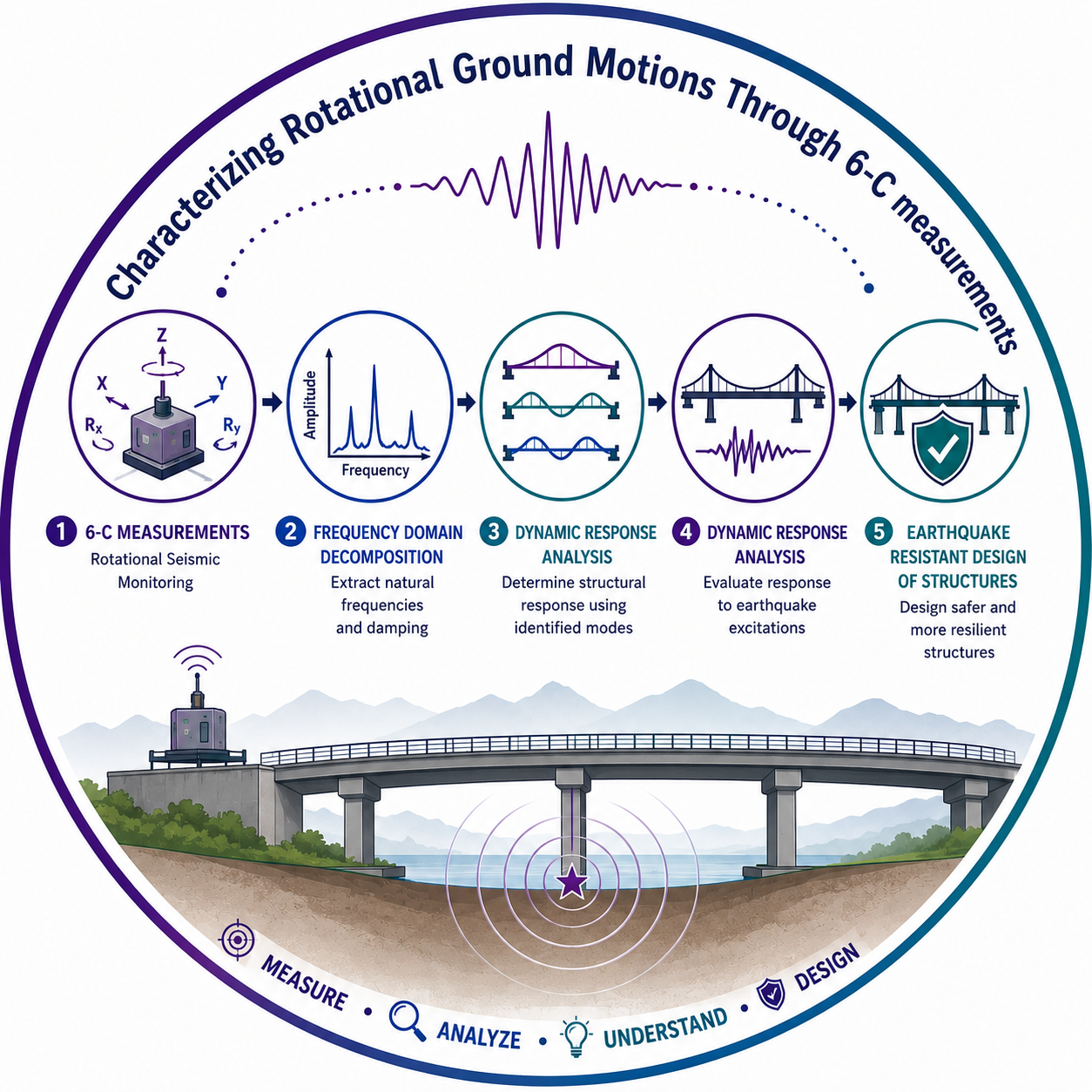
Collaboration & Academic Exchange